IFSC Code Finder - Find Bank Codes Instantly
Search IFSC Codes, MICR Codes by Bank Name, Branch, or City
Why Use Our IFSC Code Finder?
Our comprehensive IFSC code finder database contains details of 178,000+ bank branches across India. Find accurate IFSC codes, MICR codes, and SWIFT codes for NEFT, RTGS, and IMPS transactions. Get complete bank branch details including address, contact information, and branch codes instantly.
Search IFSC Codes for Popular Banks in India
Find IFSC Codes
Search and find IFSC codes for all Indian banks. Essential for NEFT transfers, RTGS payments, and IMPS transactions. Get accurate IFSC codes for any bank branch instantly.
SWIFT Codes Lookup
Find SWIFT codes (BIC codes) for international money transfers. Get SWIFT codes for all Indian banks to receive wire transfers from abroad.
MICR Codes Search
Find MICR codes for cheque clearing and processing. Search MICR codes by bank name or branch to ensure fast cheque clearance.
Understanding Bank Codes in India - IFSC, MICR & SWIFT
Bank codes are unique identifiers used for electronic fund transfers and banking transactions in India and internationally. The three most important bank codes are IFSC codes (for domestic transfers), MICR codes (for cheque processing), and SWIFT codes (for international transfers). Our IFSC code finder helps you locate these codes instantly for any bank branch across India.
🏦 IFSC Code (Indian Financial System Code)
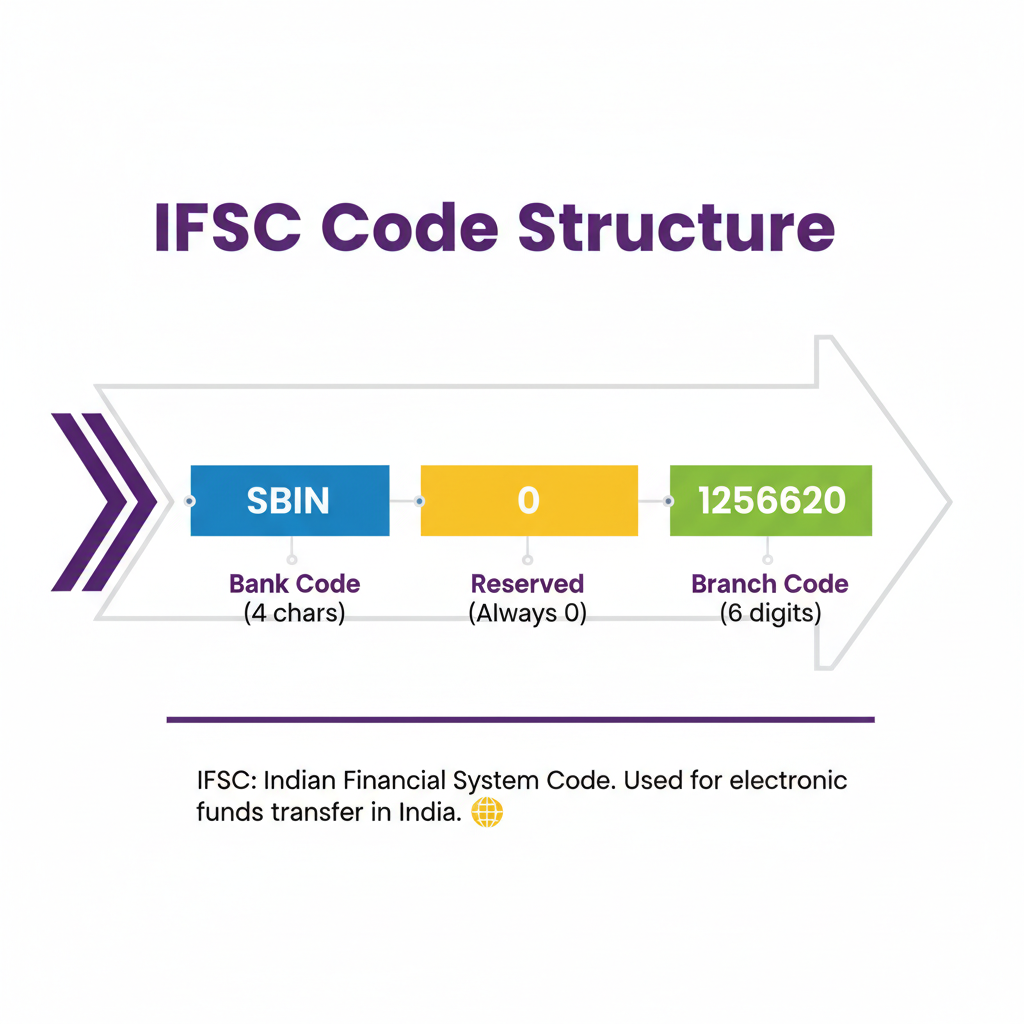
IFSC stands for Indian Financial System Code. It is an 11-character alphanumeric code that uniquely identifies every bank branch in India participating in NEFT, RTGS, and IMPS electronic fund transfer systems.
Format: ABCD0123456
- First 4 characters: Bank identifier (e.g., SBIN for State Bank of India)
- 5th character: Always '0' (reserved for future use)
- Last 6 characters: Branch code
Why is IFSC important? You need the IFSC code to transfer money via NEFT (National Electronic Funds Transfer), RTGS (Real Time Gross Settlement), and IMPS (Immediate Payment Service). It ensures your money reaches the correct bank branch.
🔢 MICR Code (Magnetic Ink Character Recognition)
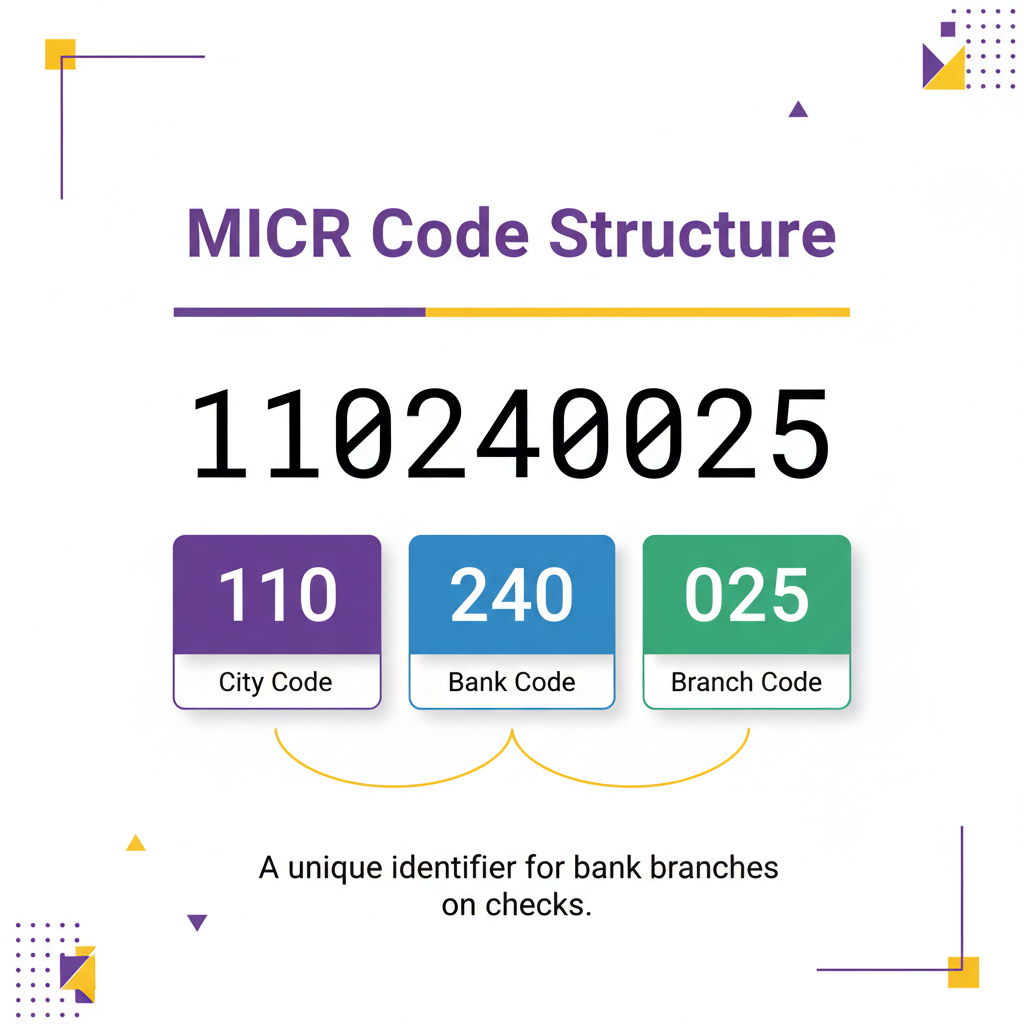
MICR stands for Magnetic Ink Character Recognition. It is a 9-digit numeric code printed on cheques using magnetic ink that enables faster processing and clearance of cheques.
Format: 123456789
- First 3 digits: City code (e.g., 110 for Delhi)
- Next 3 digits: Bank code
- Last 3 digits: Branch code
Why is MICR important? MICR codes help in faster cheque processing and reduce cheque clearing time. The code is machine-readable and helps prevent fraud.
🌍 SWIFT Code (Society for Worldwide Interbank Financial Telecommunication)
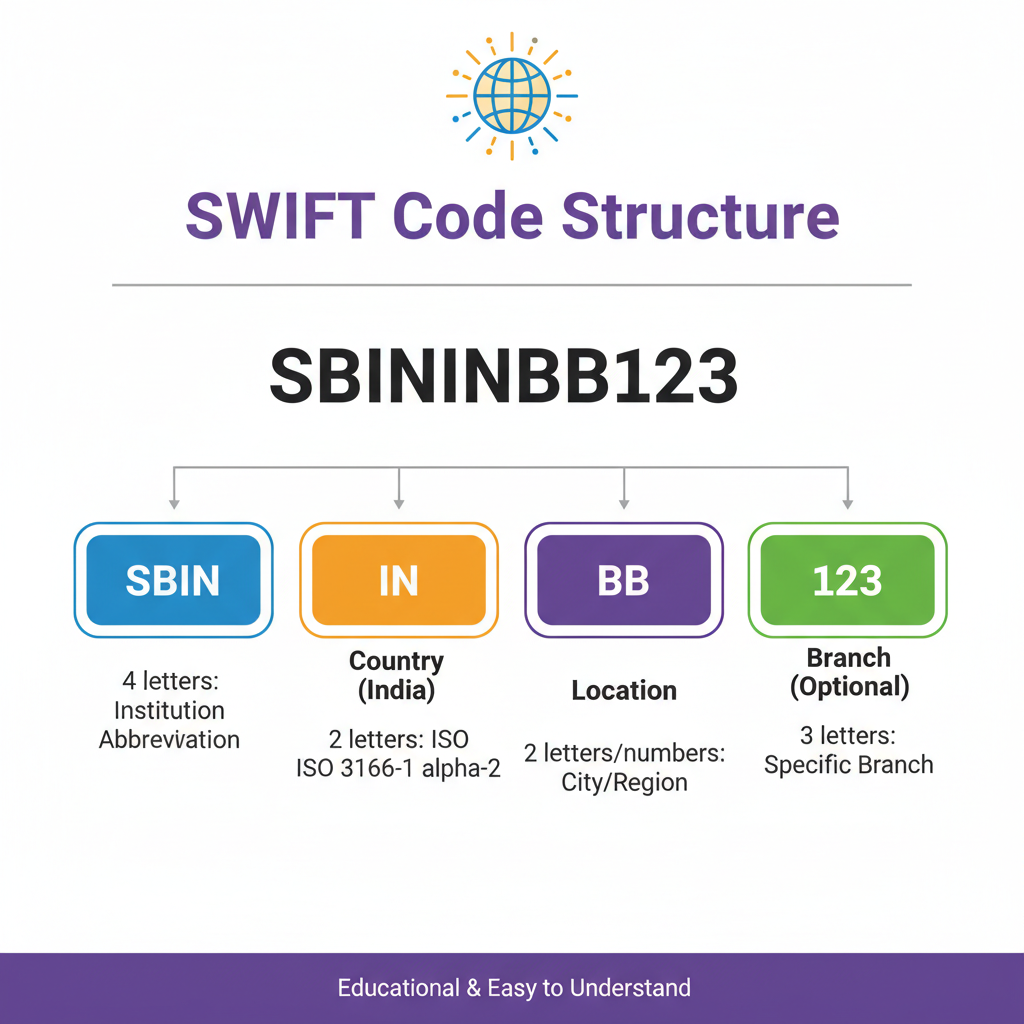
SWIFT Code (also called BIC - Bank Identifier Code) is an 8 or 11-character code used to identify banks globally for international money transfers.
Format: AAAABBCCXXX
- First 4 characters: Bank code
- Next 2 characters: Country code (IN for India)
- Next 2 characters: Location code
- Last 3 characters: Branch code (optional)
Why is SWIFT important? SWIFT codes are essential for international wire transfers, receiving money from abroad, and conducting global banking transactions.
❓ Frequently Asked Questions
Q: How do I find my bank's IFSC code?
You can find your IFSC code on your bank passbook, cheque book, or use our search tool above to find it by bank name, branch, or city.
Q: Is IFSC code same for all branches?
No, each bank branch has a unique IFSC code. Even different branches of the same bank in the same city will have different IFSC codes.
Q: Can I transfer money without IFSC code?
No, IFSC code is mandatory for NEFT, RTGS, and IMPS transfers. However, for UPI payments, you don't need IFSC code.
Q: What's the difference between IFSC and MICR?
IFSC is used for electronic fund transfers (NEFT/RTGS/IMPS), while MICR is used for cheque processing. Both identify bank branches but serve different purposes.